Anchor Accounting Services
IEEPA Resource Hub
A centralized resource center for the latest IEEPA tariff recovery developments, including court guidance, CAPE rollout updates, filing implications, execution risks, treasury considerations and practical recovery insights. This page is designed to help businesses, advisors, capital partners and service firms stay current as the program continues to evolve.


Current Program Snapshot

CAPE Phase 1 Is Live, But It Only Covers Part of the Refund
CBP has launched CAPE Phase 1 inside ACE, allowing eligible Importers of Record and authorized brokers to submit IEEPA refund declarations. However, Phase 1 mainly covers unliquidated and recently liquidated entries, while finalized and more complex claims are expected to move through later phases.
Source: U.S. Customs and Border Protection (CBP) Trade Information Notice

Phase 1 Refunds May Arrive in 60–90 Days, But Timelines Can Extend
Valid Phase 1 refunds are generally expected within 60–90 days after CAPE Declaration acceptance, but compliance concerns, filing errors, government review, and post-submission issues can delay payment.
Source: Supply Chain Dive
The Recovery Opportunity Is Massive, With Strong Importer Demand
The refund opportunity is estimated at approximately $166B before interest and may exceed $175B with interest included. Tens of thousands of importers have already registered, showing strong urgency and market demand.
Source: Business Insider
CAPE Requires Clean Data, ACE Readiness, and Proper Authorization
Successful submission requires more than basic eligibility. Importers need entry-level data, CSV formatting, ACE access, refund-specific banking setup, and correct authorization from the Importer of Record or filing broker.
Source: U.S. Customs and Border Protection

Early CAPE Issues Reinforce the Need for Active Execution Support
Portal errors, access issues, support delays, and phased filing requirements show that IEEPA recovery is not a simple “file and wait” process. Anchor’s value is in helping manage the process from claim preparation through monitoring, issue resolution, payout readiness, and closeout.
Source: CBS News
Featured Update
CAPE Phase 2 Is Live: New Refund Path for Reconciliation Entries
CBP officially launched CAPE Phase 2 on June 29, 2026, opening up electronic refunds for 2.8 million more customs entries flagged for reconciliation.
The rules for this new phase are very strict: it only covers entry types 01, 02, and 06 if your broker has not filed the final Type 09 reconciliation paperwork yet, and the entries are either unliquidated or within 80 days of liquidation. The system must strip out the illegal IEEPA duties before that final reconciliation paperwork is submitted. Once your broker files the Type 09 paperwork, those entries are permanently locked out of Phase 2 refunds.
With Phase 2 now live (and with CBP, ACE, and CAPE requirements continuing to evolve), Importers of Record are advised to confirm eligible entries, coordinate with brokers, and submit through CAPE before final reconciliation paperwork is filed.


.png)
Recent Developments

CBP Issues Guidance on June 29, 2026, CAPE Expansion
CSMS Guidance unpacks CBP’s highly anticipated Phase 2 rollout of the CAPE refund tool, which introduces processing functionality for an additional 2.8 million entries flagged for reconciliation. The article provides a critical operational map for compliance teams, explaining the strict sequence for stripping unconstitutional IEEPA duties before final reconciliation entries are submitted. This time-sensitive overview outlines immediate timing gates and the permanent lockouts that occur post-filing, serving as an indispensable checklist for companies needing to audit their trade data and synchronize with brokers ahead of tight federal deadlines.

IEEPA Tariff Refund Update: Government Appeals CIT Refund Order and the Road Ahead for Importers
Holland & Knight Alert delivers an essential breakdown of the federal government's high-stakes appeal to the U.S. Court of Appeals for the Federal Circuit. The briefing reveals how the DOJ is weaponizing recent Supreme Court precedent to challenge universal injunctions, explicitly aiming to bar any importer who hasn't filed an individual protective lawsuit from accessing the $30 billion "finally liquidated" refund pool. Highlighting CBP's staggering operational feat of processing 8.5 million entries in just six weeks, this alert underscores why businesses cannot afford to sit on the sidelines and must strongly consider a parallel, dual-track strategy of CAPE participation and active litigation.
CBP Preparing for More Tariff Refunds Even as Key Issue Remains Disputed
Trade Report outlines U.S. Customs and Border Protection’s massive logistical push to scale the CAPE refund pipeline, having already accepted over $95 billion in claims and dispatched nearly $24 billion to the Treasury. The article details the critical legal friction unfolding behind the scenes, exposing how the Department of Justice is actively fighting to block payouts for finally liquidated entries. This piece serves as a vital strategic warning for corporate networks, highlighting why importers must act immediately to secure their current CAPE eligibility windows before ongoing DOJ appeals complicate or narrow the recovery process.

After Issuing More Than $20 Billion in Tariff Refunds, the Trump Administration Is Now Pursuing Legal Action to Bring the Process to a Standstill
Fortune reports on the Department of Justice’s aggressive push to appeal the federal court's universal tariff refund order, threatening to halt automatic distributions for the estimated 330,000 potentially eligible U.S. importers. The article exposes a critical legal battle line, detailing how the government is attempting to completely block payouts for entries that have already completed the liquidation process. This timely piece underscores a rising sense of urgency for businesses, illustrating how a successful government appeal could freeze the streamlined CAPE pipeline and replace it with a slow, high-friction, case-by-case litigation track.
.png)
Trump Administration Refunds $20B in Overturned Tariffs After Supreme Court Loss
The New York Post breaks down the massive financial scale of the ongoing tariff recovery effort, reporting that CBP has already processed over $20 billion in refunds while another $85 billion remains in the pipeline. This piece provides a critical market snapshot of the fragmented disbursement landscape, highlighting the sporadic nature of government payouts and severe administrative bottlenecks at the Treasury. It serves as a vital case study for importers on the necessity of real-time line-item tracking and immediate, precise banking configuration to prevent claims from stalling.
.png)
Companies Quietly Chase Billions in Trump Tariff Refunds as Lawsuits and Politics Moun
The Los Angeles Times details the highly discreet scramble among corporate entities to recover their shares of the $166 billion IEEPA refund pool. The article explores how companies are balancing necessary Wall Street financial tracking against the risk of political blowback and consumer class-action lawsuits over pass-through pricing. Highlighting critical operational complexities—including multi-million-dollar exclusions from early payment windows due to customs reconciliation tags—the piece underscores the significant administrative burden of filing, proving why businesses require a secure, highly precise, and confidential data strategy.
.png)
Getting a Tariff Refund Has Become a Bureaucratic Nightmare for Small Businesses
Business Insider highlights the severe operational friction smaller importers face when attempting to navigate the federal government’s Automated Commercial Environment (ACE) portal. The piece shines a spotlight on real-world administrative hurdles, ranging from lost password backlogs to a crushing 19% claim rejection rate caused by historical broker filing errors and classification mismatches. It serves as an essential resource demonstrating how easily self-filed claims can stall, reinforcing why smaller operations require direct data stream ingestion and rigorous pre-submission audits to protect their capital.
.png)
Tariff Refunds Are Arriving. Now Comes the Hard Part.
CNBC reports that the first wave of tariff refunds has started reaching businesses after the Supreme Court ruled certain Trump-era tariffs unlawful. Companies such as Oshkosh and Basic Fun have reported receiving partial payments, while CBP has processed roughly $35.46 billion in refunds across 8.3 million shipments as of May 11. In one reported example, a recipient had only received around 5% of what they believe is owed. The rollout also raises practical questions around remaining balances, refund timing, reconciliation, and whether customers who absorbed tariff-related costs may seek a share of recovered funds.
.png)
Fashion Confronts the Realities of Tariff Refunds
Vogue outlines the unique pressures hitting fashion and beauty brands as they rush to recover their share of the estimated $166 billion pool of invalidated IEEPA duties. The article marks the transition into a messier execution phase under CBP’s newly deployed CAPE portal, exposing hidden eligibility gaps, technical errors, and an unequal administrative track that heavily favors massive corporate conglomerates. It serves as a stark warning to retail brands about the operational drain of self-filing, reinforcing the competitive necessity of an outsourced tech infrastructure.
.png)
Trade Court Blocks Trump Tariffs; Importers Still Pay Now
Clark Hill breaks down a major legal paradox following a landmark U.S. Court of International Trade ruling that found the administration’s temporary 10% Section 122 tariffs to be unlawful. While the court ruled on the merits that the executive branch exceeded its authority, it strictly denied a nationwide injunction, restricting active relief and refunds to the explicit plaintiffs in the case. This resource is vital for non-party importers who must continue paying the surcharge, demonstrating why they must proactively track 180-day liquidation windows and construct entry-by-entry data files to preserve their future right to recovery.
.png)
Trade Court Strikes Down Trump’s 10% Universal Tariffs
Axios reports that the U.S. Court of International Trade ruled Trump’s newest 10% universal tariffs illegal, finding that Section 122 of the Trade Act of 1974 does not give the president broad authority to impose across-the-board tariffs in this way. The ruling shows that tariff policy remains legally unstable even after the IEEPA decision, with courts continuing to scrutinize emergency or temporary tariff authorities. However, the injunction is narrower than the earlier IEEPA ruling, and tariff collections are expected to continue for most importers while the administration appeals.
.png)
He Recorded His Quest for Tariff Refunds. It Shows Why Billions May Never Get Repaid
NPR follows Richard Brown, owner of Proof Culture, a small sneaker-accessory importer that may be owed up to $25,000 in tariff refunds — about 10% of the company’s prior-year revenue. The piece is useful because it shows how difficult recovery can be for small importers that lack customs brokers, lawyers, or internal trade compliance teams. Brown had to digitize purchase orders, track shipping invoices, and chase missing paperwork from freight forwarders before he could even be ready to file. The article reinforces that refund eligibility alone is not enough; fragmented records, unfamiliar customs systems, technical errors, and limited internal capacity may prevent many businesses from recovering what they are owed.
.png)
CBP's First IEEPA Tariff Refunds Drop May 11, 2026: A 9-Day Importer Checklist
FreightFigures provides a critical, time-sensitive operational roadmap detailing the mechanics of CBP’s initial CAPE milestone rollout. The article breaks down the strict criteria dictating first-wave eligibility, explaining how unliquidated statuses, stale ACH routing data, or any of the five major Phase 1 exclusions can instantly delay a corporate payout by 60 to 90 days. This comprehensive guide serves as an essential checklist for high-volume importers who need to audit their entry summaries, separate clean lines from complex exclusions, and insulate their pipelines from systemic validation failures.

The Tariff Refund Portal Is Live—and Businesses Are Already Getting Error Messages
Barron’s reports that businesses were already encountering error messages shortly after the tariff refund portal went live. The piece is useful because it reinforces that CAPE is not a simple “file and get paid” process. Early portal issues may lead some businesses to delay filing to avoid preventable errors, underscoring the importance of clean data, technical readiness, and careful claim preparation before submission.

Tariff Refund Portal Off to a Bumpy Start
CBS News reports that some businesses experienced glitches, access issues and high-volume error messages shortly after CAPE launched. The piece is useful because it shows the practical friction importers may face when trying to file, especially around ACE account setup, unresolved support tickets, and system readiness. It also reinforces that while up to $175B may be owed in refunds, successful recovery still depends on accurate submissions, proper portal access, and issue-free processing.
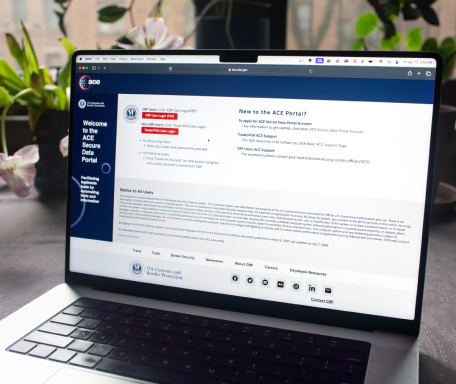
Businesses Race to Apply for Tariff Refunds
NPR covers the launch-day rush into the tariff refund portal as businesses begin filing claims through CAPE. The piece is useful as a real-world snapshot of how quickly the market moved once the portal opened, while also reinforcing that the first phase is focused on entries that have not yet fully finalized and that older finalized claims still depend on later phases.

CSMS #68340863 - UPDATE - Consolidated Administration and Processing of Entries (CAPE) for IEEPA Refunds, April 20, 2026, Deployment
This official CBP deployment bulletin confirms the April 20 CAPE launch and provides practical filing details for the trade community. It explains who can file, how CAPE declarations work, the CSV upload format, the 9,999-entry limit per declaration, the role of importers of record and brokers, and key operational guidance tied to protests, PSCs, and ACH refund payments.
Consolidated Administration and Processing of Entries (CAPE) Phase 1
This CBP Trade User Information Notice provides a more structured explanation of what CAPE Phase 1 will do when it launches. It outlines the electronic filing path through ACE, explains how CAPE validates refund requests, and clarifies which entry populations are included in Phase 1, including most unliquidated entries, certain recently liquidated entries, and some suspended, extended, under-review, and warehouse-related entries.
TPC Tariff Tracker
The Tax Policy Center’s tariff tracker gives a broader view of the post-IEEPA tariff landscape. It is useful for context because it explains that while the Supreme Court struck down IEEPA tariffs, other tariff authorities remain in place, and new tariff actions continue to affect the broader market and policy environment.
.png)
US Customs and Border Protection Updates Court on Process to Refund IEEPA Duties; Phase 1 Scope Refined and Progress Milestones Reported
EY Tax News details a pivotal status update filed with the U.S. Court of International Trade outlining the development milestones and refined boundaries of CBP’s new CAPE functionality. The article breaks down the rigid constraints of the Phase 1 rollout, revealing that it covers only 63% of eligible entries while completely stranding complex files flagged for reconciliation, drawback claims, or final liquidations. This technical summary highlights the absolute necessity of rigorous entry triaging, automated CSV data formatting, and mandatory electronic refund enrollment for importers navigating the system’s initial 45-day processing window.

Execution quality is becoming just as important as legal entitlement
The updated materials consistently show that CAPE is a phased, entry-driven, actively managed process where timing, submission accuracy, follow-up and issue resolution will affect who gets paid and when.

Phase 1 is only a partial operational solution
Even with a confirmed April 20 launch, Phase 1 is expected to address only part of the total entry population, with major categories deferred to later phases.

Court expands recovery to finally liquidated entries
The Court of International Trade clarified that even entries with final liquidation must be reliquidated to remove IEEPA duties. This substantially widened the potential recovery universe.

Browse the Full Library of IEEPA Resources
Use the resources below to stay current on the legal framework, CAPE updates, filing implications, treasury issues and practical execution challenges shaping the IEEPA recovery process. Resources should be displayed from newest to oldest.
%201.png)
Why Some Tariff Refunds Get Delayed: IEEPA / CAPE Reconciliation Overview
A straightforward explanation of customs reconciliation and why entries with provisional data or Entry Type 09 summaries are excluded from immediate Phase 1 processing, using Hasbro's deferred claims as a practical example.

Legal Framework, Court Guidance and Practical Application
A plain-English breakdown of why IEEPA tariffs are refundable, why traditional protest rules do not control in the same way here and how the court-driven remedy changes the refund landscape.

Treasury Offset Program Explained
A short guide to how Treasury offsets can reduce actual payout even after a claim is approved, and why net recovery planning matters just as much as gross recovery modeling.

CAPE System Processing Challenges
A concise overview of why execution, not eligibility alone, will likely determine outcomes, including staffing constraints, queue problems, manual intervention and unpredictable timing.

IEEPA Tariff Recovery FAQs
A practical FAQ sheet that explains what the IEEPA tariffs were, who may be eligible for recovery, what documents may be needed, how the process works, what AAS handles and why...

IEEPA Tariff Recovery Opportunity Guide
A concise educational overview of why this refund opportunity matters, who may have been impacted, where tariff exposure may be hiding and why organized execution, documentation a...
Why Staying Current Matters
This is not a static refund environment. CAPE is being rolled out in phases, the process remains under active court supervision and practical recovery outcomes may depend on changes in guidance, submission timing, claim architecture, payment readiness and issue resolution after filing. For that reason, businesses should not assume that one update tells the full story.
Need Help Applying These Updates to your Own Situation?